The short version
- Pressure-treated wood is the budget option and needs regular cleaning and sealing.
- Composite costs more upfront but skips the yearly staining.
- Both sit on a wood frame. The frame and footings decide how long the deck lasts.
- We can price both options in the same estimate so you can compare.
Pressure-treated wood
Pressure-treated lumber is the most common decking around Boston and the least expensive to build with. It can be stained almost any color and is easy to repair: a damaged board is simply replaced.
The trade-off is maintenance. Wood decks need to be cleaned and sealed or stained every few years, more often on decks that get full sun or sit in the shade under trees. Skip that and the boards gray, check, cup and splinter faster.
Composite
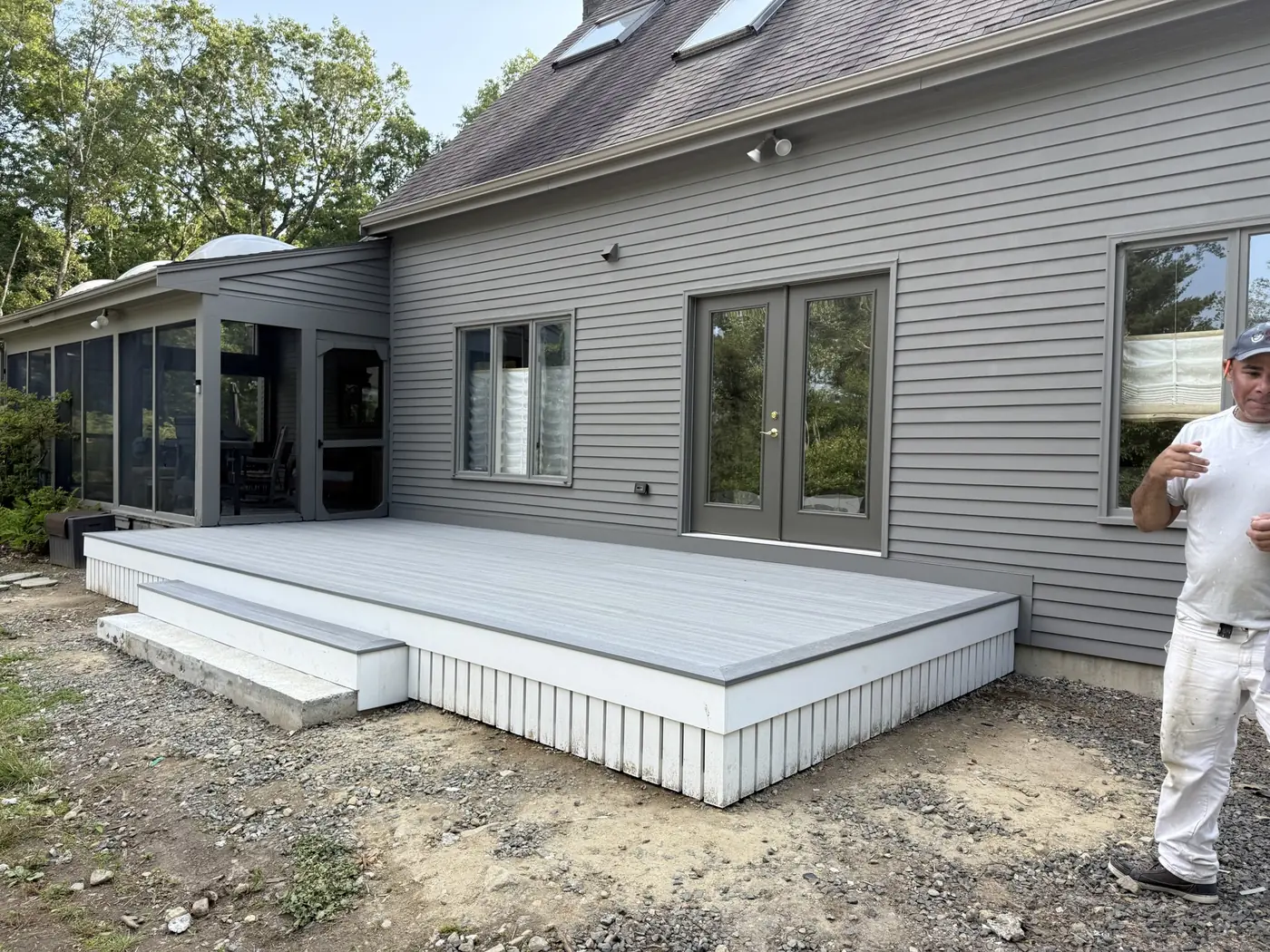
Composite decking is made from wood fibers and plastic, often with a protective outer layer. It does not need staining, resists rot and splinters, and keeps its color longer. It costs more to buy and install, so the payback comes over years of not sanding and staining.
A few things to know: composite boards in dark colors can get hot in direct summer sun; they can scratch; and you should follow the manufacturer's guidance on snow removal, usually a plastic shovel rather than metal.
Side by side
| Pressure-treated wood | Composite | |
|---|---|---|
| Upfront cost | Lower | Higher |
| Regular maintenance | Clean and seal or stain every few years | Occasional cleaning |
| Look | Natural wood, can be stained any color | Consistent color and grain pattern |
| Splinters and rot | Possible as the wood ages | Resists both |
| Summer sun | Stays cooler | Dark colors can get hot |
| Repairs | Easy to replace a single board | Boards replaced to match the product line |
| Frame underneath | Pressure-treated lumber | Pressure-treated lumber, often with closer joist spacing |
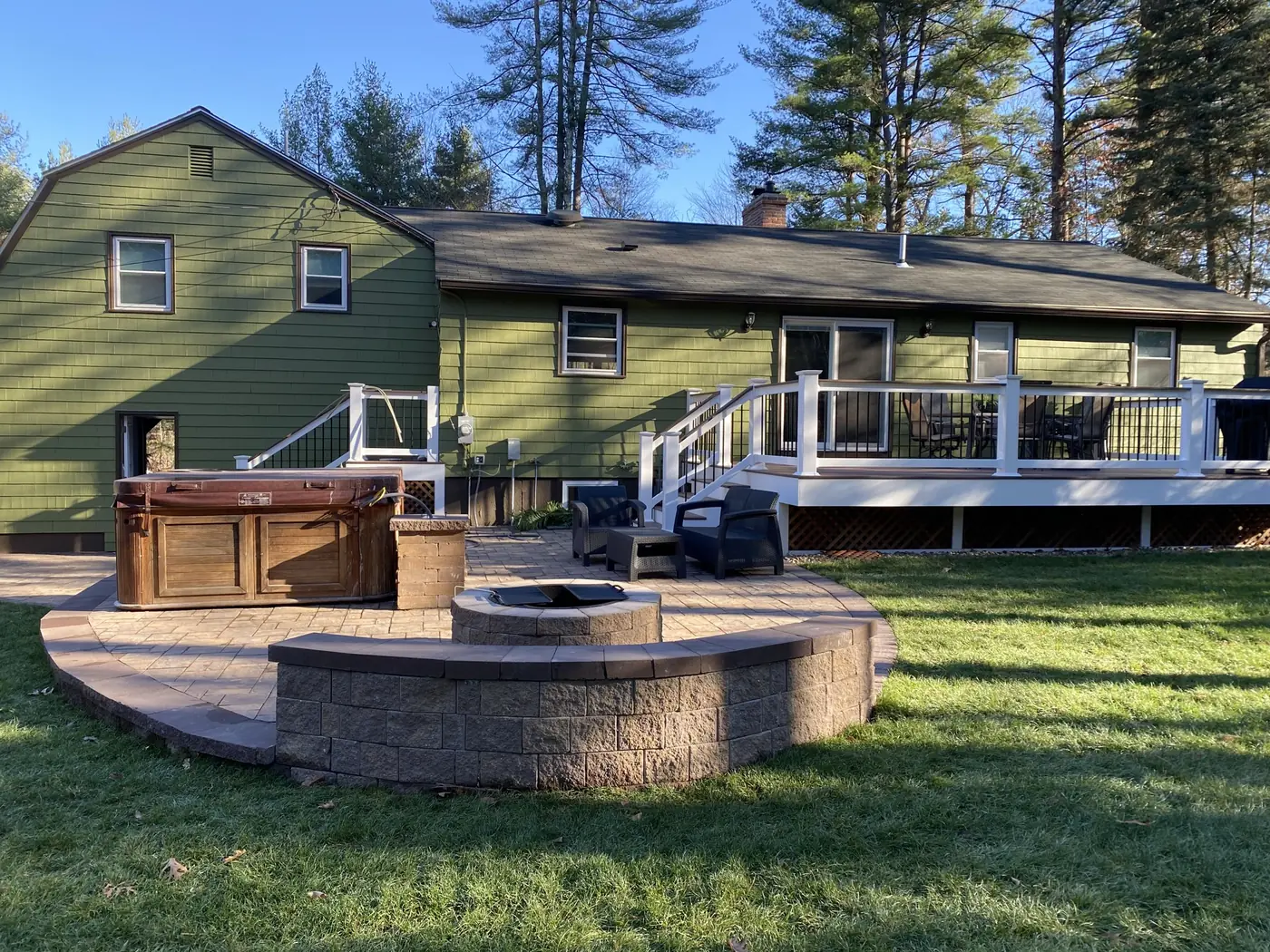
The frame matters more than the boards
Whichever surface you choose, the structure underneath is almost always pressure-treated lumber: footings, posts, beams, joists and the ledger that attaches to the house. That is what carries the snow load and survives the freeze and thaw. A beautiful composite surface on a weak frame is still a weak deck.
Composite has one extra requirement: many products need the joists closer together than a typical wood deck. If you plan to put composite on an existing frame, that spacing has to be checked first.
Railings, stairs and details
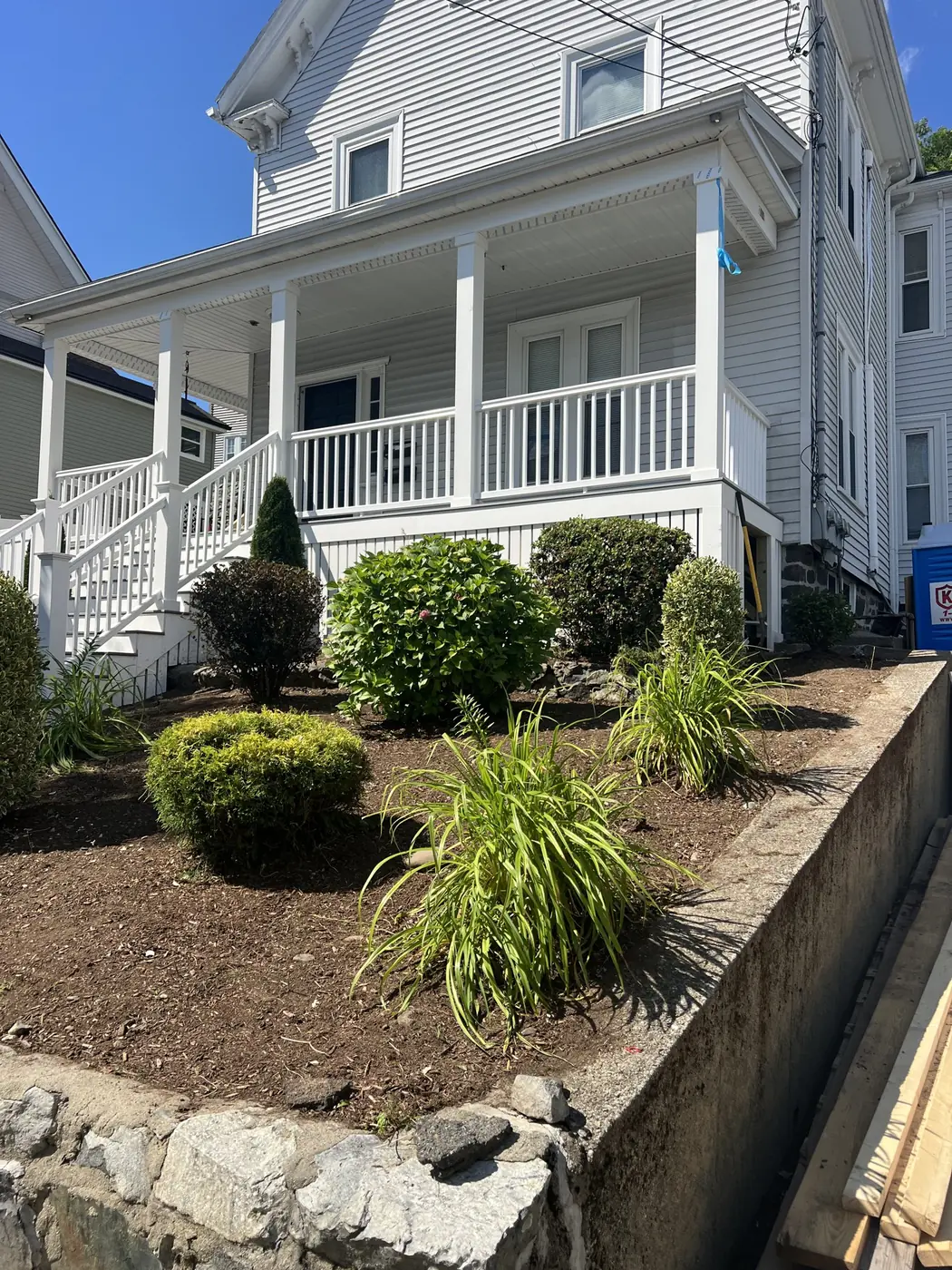
Railings come in wood, composite, vinyl and metal, and you can mix: a composite deck with white vinyl rails is a common look in the area. Hidden fasteners give a clean surface without screw heads. Skirting closes in the space under a low deck and keeps animals out.
How to decide
- Choose wood if upfront cost matters most and you do not mind maintenance, or if you want a natural stained look.
- Choose composite if you plan to stay in the house for years and would rather spend weekends on the deck than working on it.
Cowboy General Service Inc. remodels, builds and paints for homeowners in Boston and the towns within about 50 miles of Malden, since 2006. Questions about your own house? Call or text (617) 869-2290.