The short version
- If the frame, footings and ledger are sound, new decking and railings can be enough.
- The ledger, where the deck attaches to the house, is the most important connection on a deck.
- Soft wood, wobbly railings and sinking posts are signs to have it inspected.
- Rot on the house behind the deck must be repaired before a new deck goes on.
A walk-around you can do yourself
Pick a dry day and take a screwdriver. Check these places:
- Deck boards. Push the screwdriver into a few boards, especially near the house and in shady spots. If it sinks in easily, the wood is soft.
- The ledger. Look underneath where the deck meets the house. You want solid wood, proper bolts or structural screws, and metal flashing above it, not just nails.
- Joists. Check the ends of the joists and anywhere water collects. Dark, soft or crumbling wood is a problem.
- Posts and footings. Posts should sit on concrete footings, not buried bare in the soil. Look for sinking, leaning or rot at the base.
- Railings. Push on them. A railing should not move.
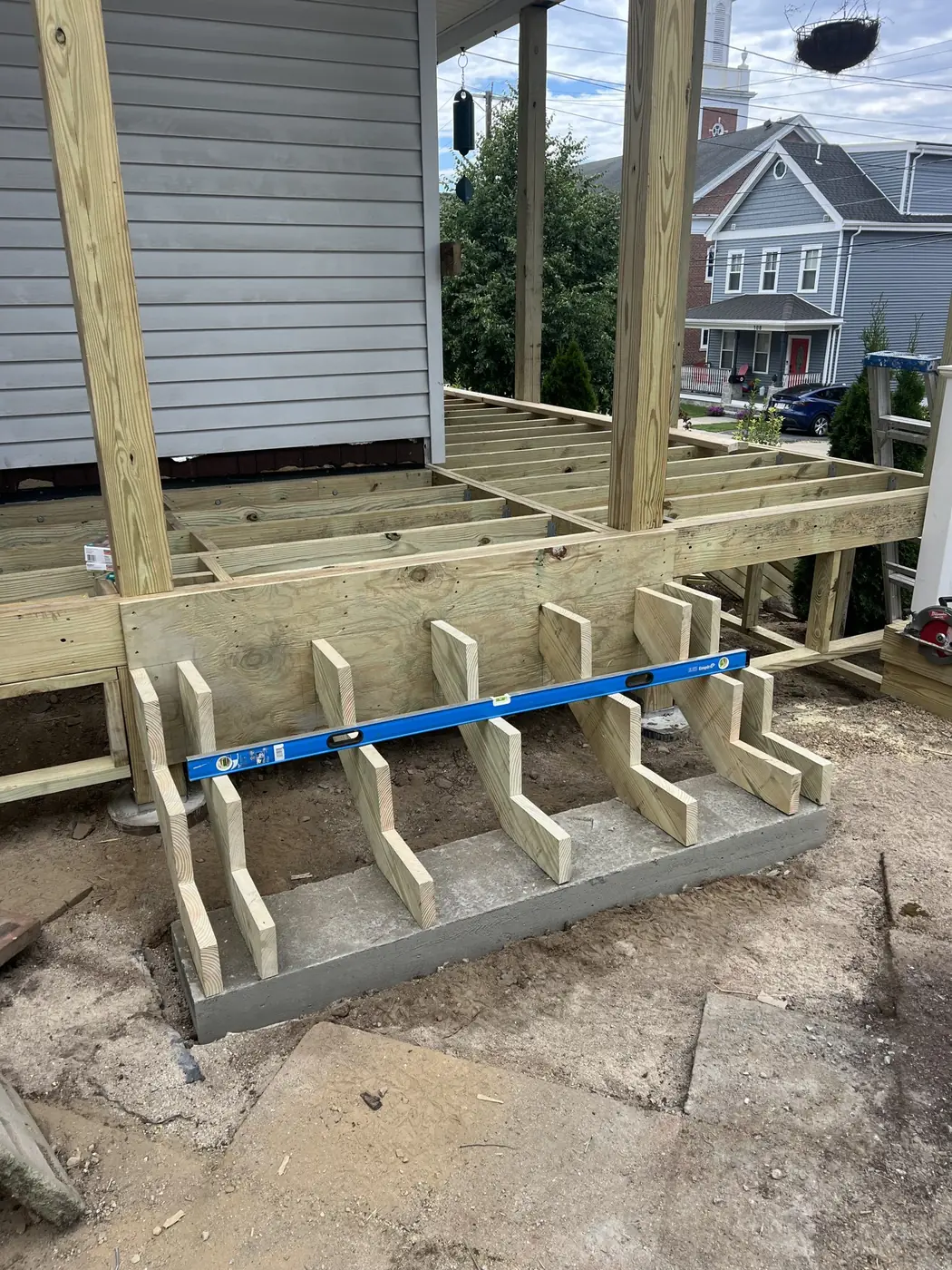
- Stairs. Check the stringers (the sloped boards that carry the steps), the treads and the handrail.
When repair or resurfacing is enough
If the frame, footings and ledger are sound and only the surface is worn, splintering or ugly, you usually do not need a new deck. New decking and railings on the existing frame can give you a deck that looks new, and composite boards can cut down on future maintenance. Individual rotted boards, a loose railing post or a failing stair can often be repaired on their own.
When a rebuild is the safer choice
If the joists are soft, the posts sit on the ground, the ledger is nailed on or rotted, or the deck has been patched many times, a rebuild is usually safer and better value. Putting new boards on a failing frame just hides the problem for a few years.
Check the house, too
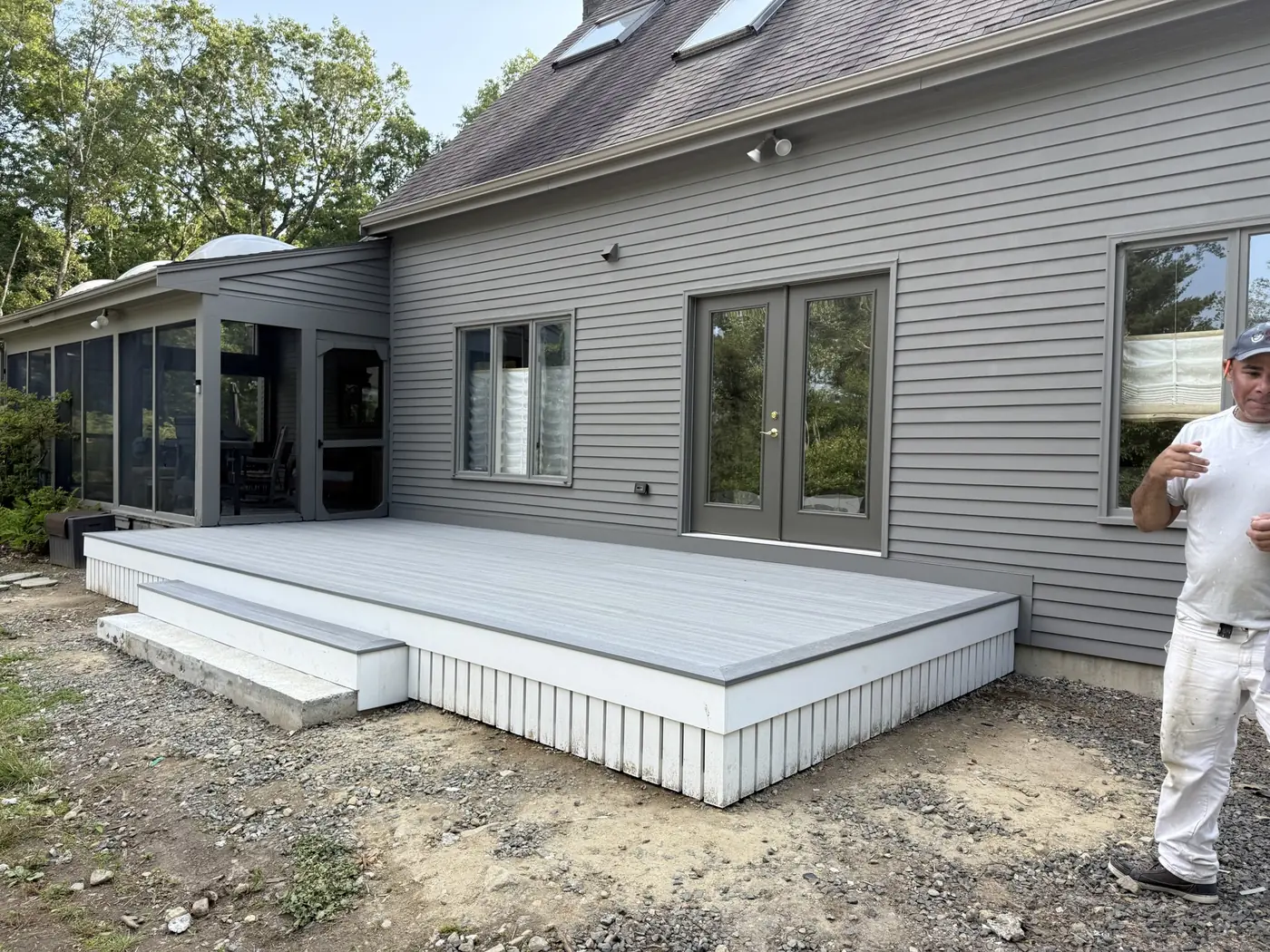
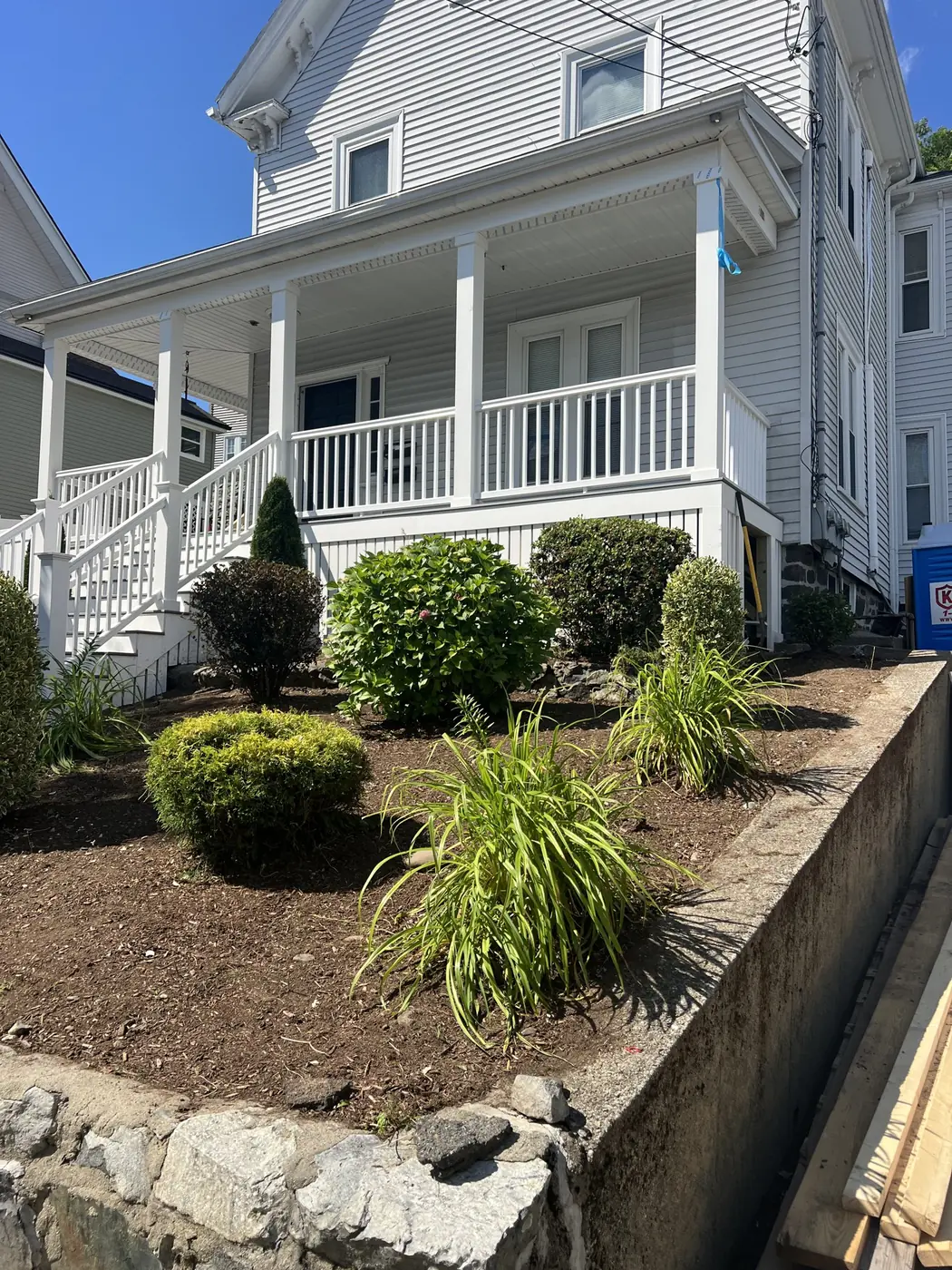
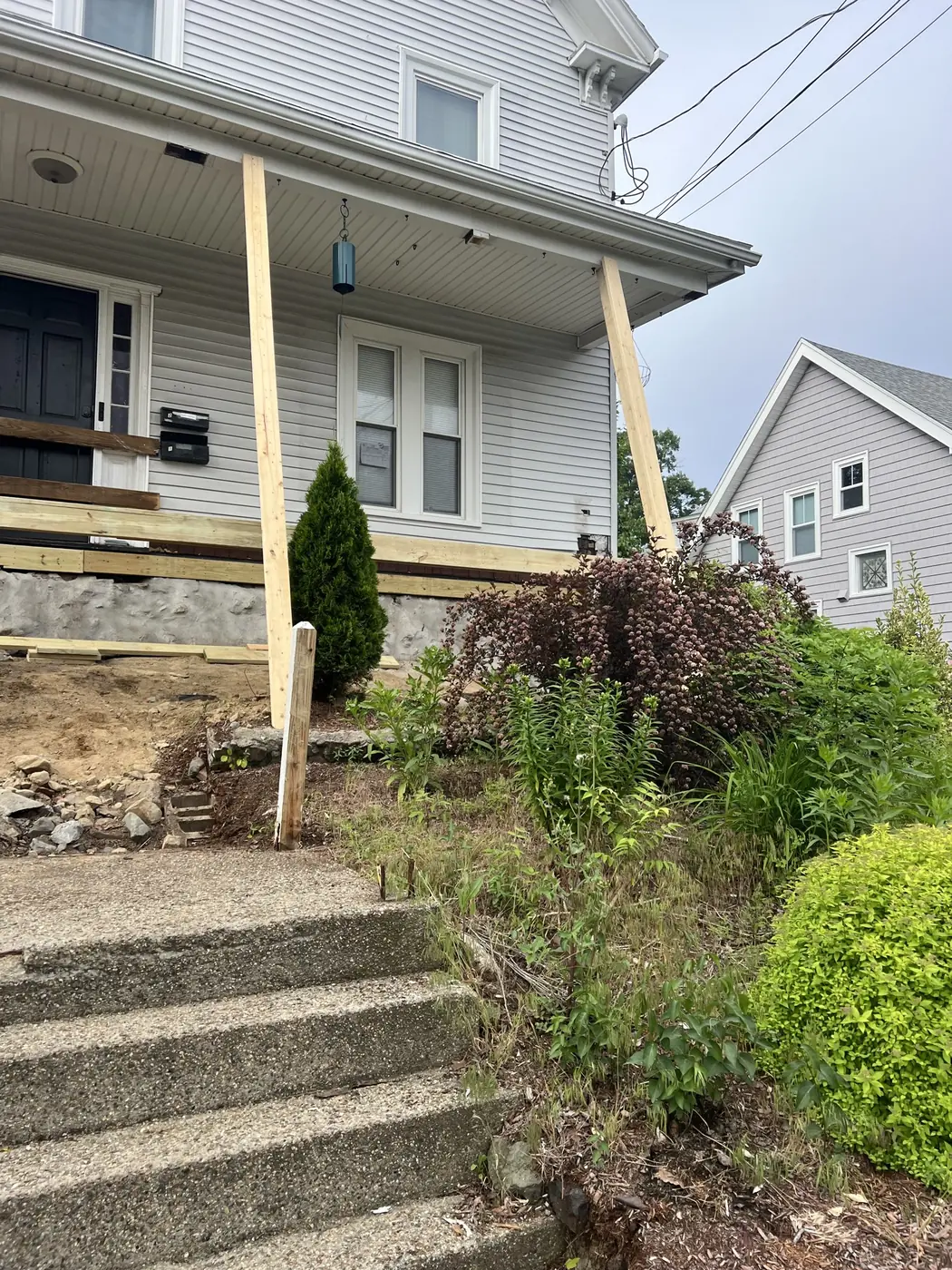
Water that gets behind a deck often damages the house itself: the sill, the rim joist or the bottom of the wall. On a porch we rebuilt in Melrose, the porch was sitting on temporary posts and the sill behind it was rotted. We repaired the house first, poured new footings, then rebuilt the porch and stairs. In Boxford, the lower back wall of the house had to be opened and rebuilt before the new deck could go on. A good contractor looks at both sides of that connection.
Maintenance that adds years
A deck that is checked and maintained lasts much longer than one that is only noticed when something gives. A few habits make the difference:
- Every spring: walk the deck, check the railings and stairs, clear debris from between the boards, and look underneath at the ledger and posts.
- Keep it clean: leaves and pine needles hold water against the wood. Sweep them off, especially before winter.
- Keep water moving: make sure gutters and downspouts do not dump onto the deck or next to its footings.
- Seal wood decks on a regular schedule, before they look worn.
- Fix small problems early: a loose board or a wobbly post is a quick repair now and a bigger one later.
Permits
New decks and structural rebuilds usually need a building permit in Massachusetts towns. Simple resurfacing often does not, but rules vary by town. We go over what your project needs at the estimate.
Cowboy General Service Inc. remodels, builds and paints for homeowners in Boston and the towns within about 50 miles of Malden, since 2006. Questions about your own house? Call or text (617) 869-2290.