The short version
- Original woodwork in older homes is often worth repairing rather than replacing.
- Historic profiles can usually be matched closely, or built up from several stock pieces.
- Walls in older houses are rarely straight; good trim work hides that.
- Paint-grade and stain-grade trim use different materials and cost different amounts.
Repair before you replace
Many older Boston-area homes still have their original casings, baseboards, stair parts and built-ins. That wood is often old-growth and very stable, and the profiles are not always sold anymore. When it is worth saving, a damaged section can be patched, a split piece glued, a missing length replaced, and the whole run stripped or repainted to look whole again.
Replacement makes sense when the trim is badly damaged, has been painted over so many times the detail is gone, or does not suit a remodeled room.
Matching an old profile
If you need to add trim that matches what is already in the house, there are a few options:
- A close stock profile. Many historic shapes have a near match in today's catalogs.
- A built-up profile. Two or three stock pieces combined, like a base with a cap and a shoe, can recreate a larger, older look.
- Reuse. Trim removed from a closet or a wall that is being opened can patch a more visible spot.
In most cases we can get close enough that the new piece disappears into the room once it is painted.
Walls that are not straight
Walls in older Boston houses are rarely straight, floors are rarely level and corners are rarely square. Good trim work does not fight that; it hides it. Baseboards are scribed to follow an uneven floor, casings are adjusted to sit tight on wavy plaster, and joints are fitted rather than forced.
Coped corners vs mitered corners
On inside corners, a miter joins two pieces cut at 45 degrees. On walls that are not square, miters tend to open up over time. A coped joint shapes the end of one piece to follow the face of the other, so it stays tight as the house moves through the seasons. It takes longer, and it is how inside corners on baseboard and crown should be done.
Trim projects that change a room
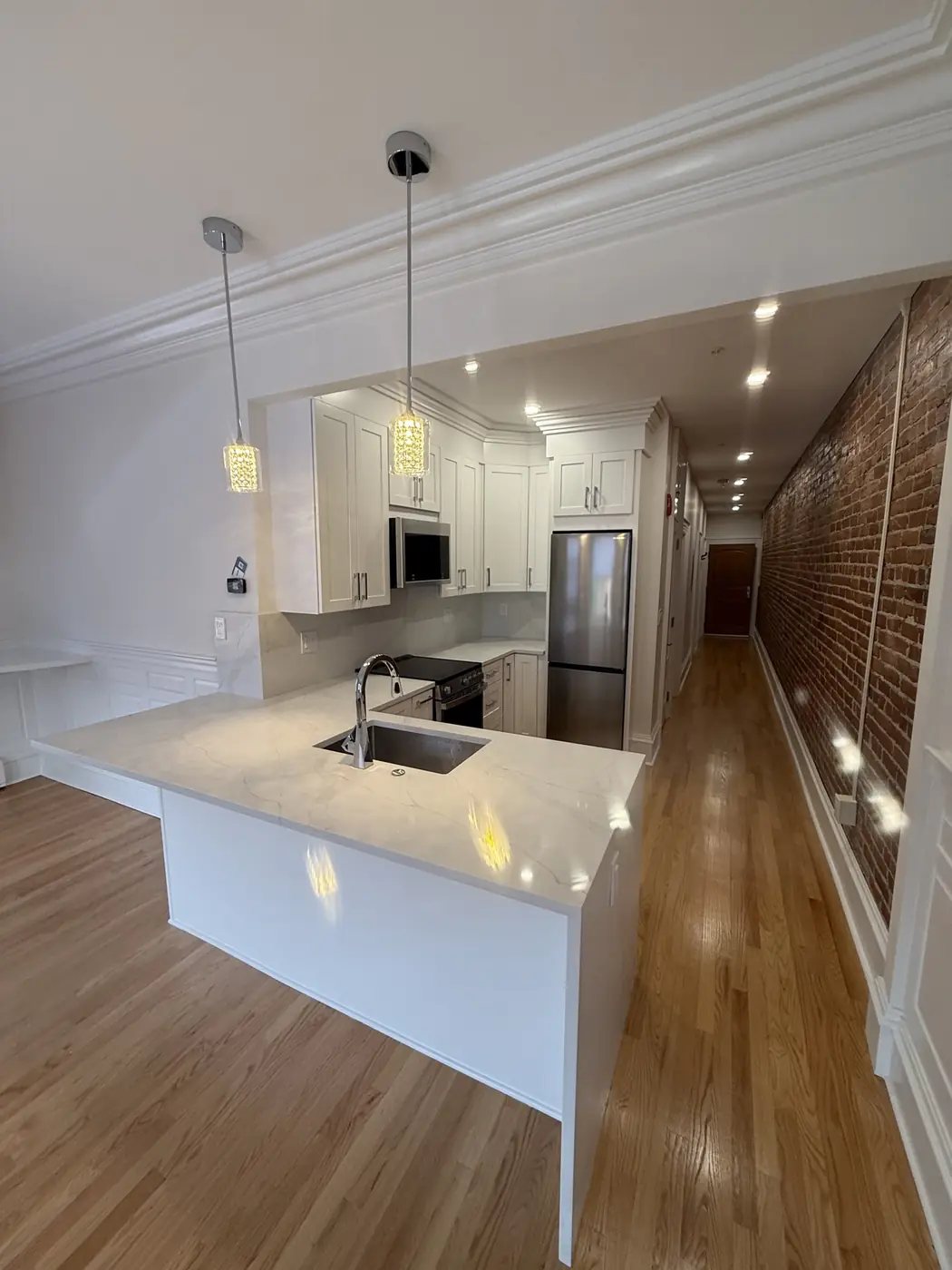
- Crown molding finishes the line between wall and ceiling and makes a room look taller.
- Wainscoting, from board and batten to raised panel or beadboard, adds character and protects walls in hallways and dining rooms.
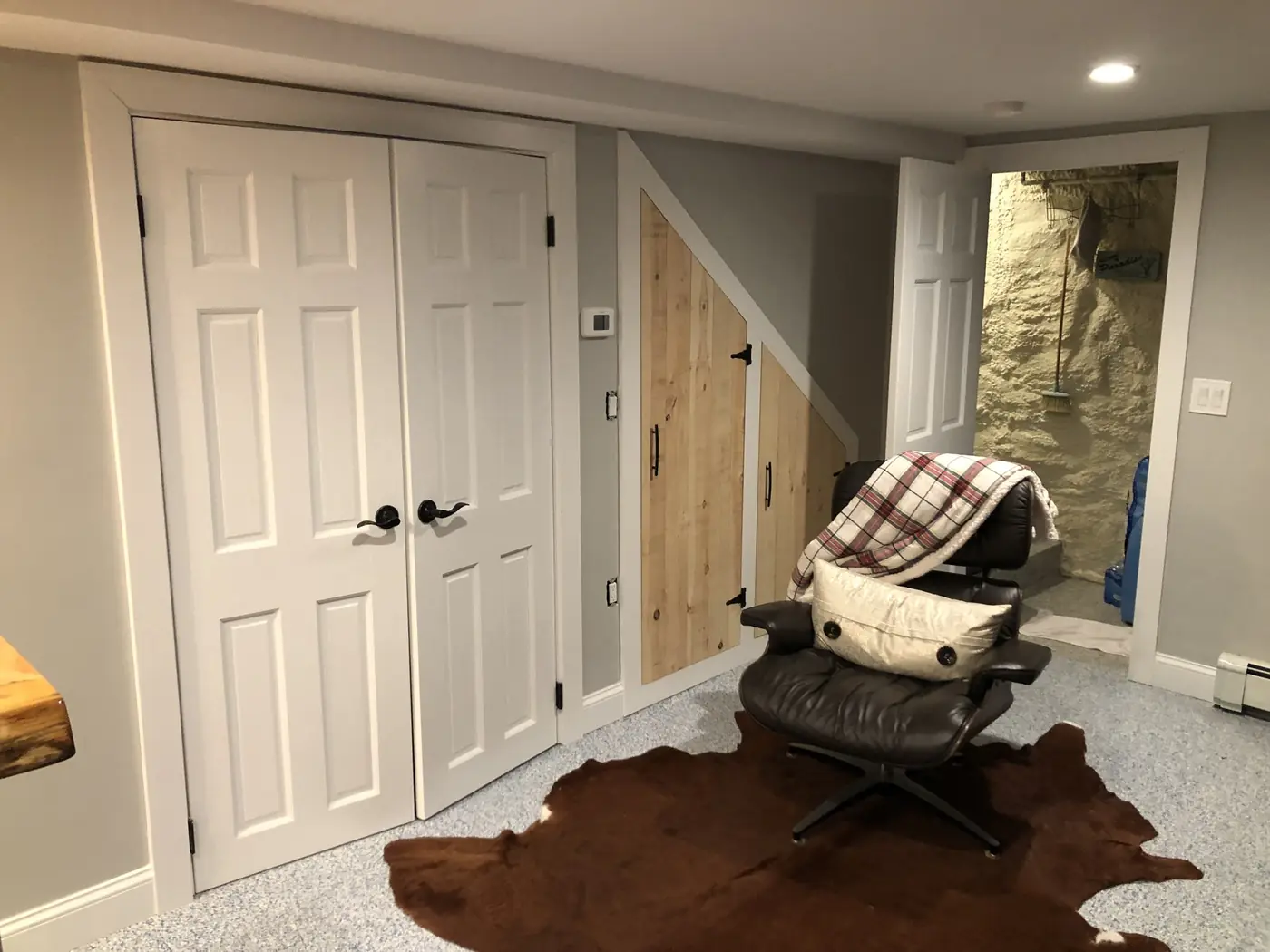
- Built-ins, like shelving around a fireplace, a window seat or a mudroom bench, add storage that looks like it was always there.
- New casings on doors and windows can change the style of a whole floor.
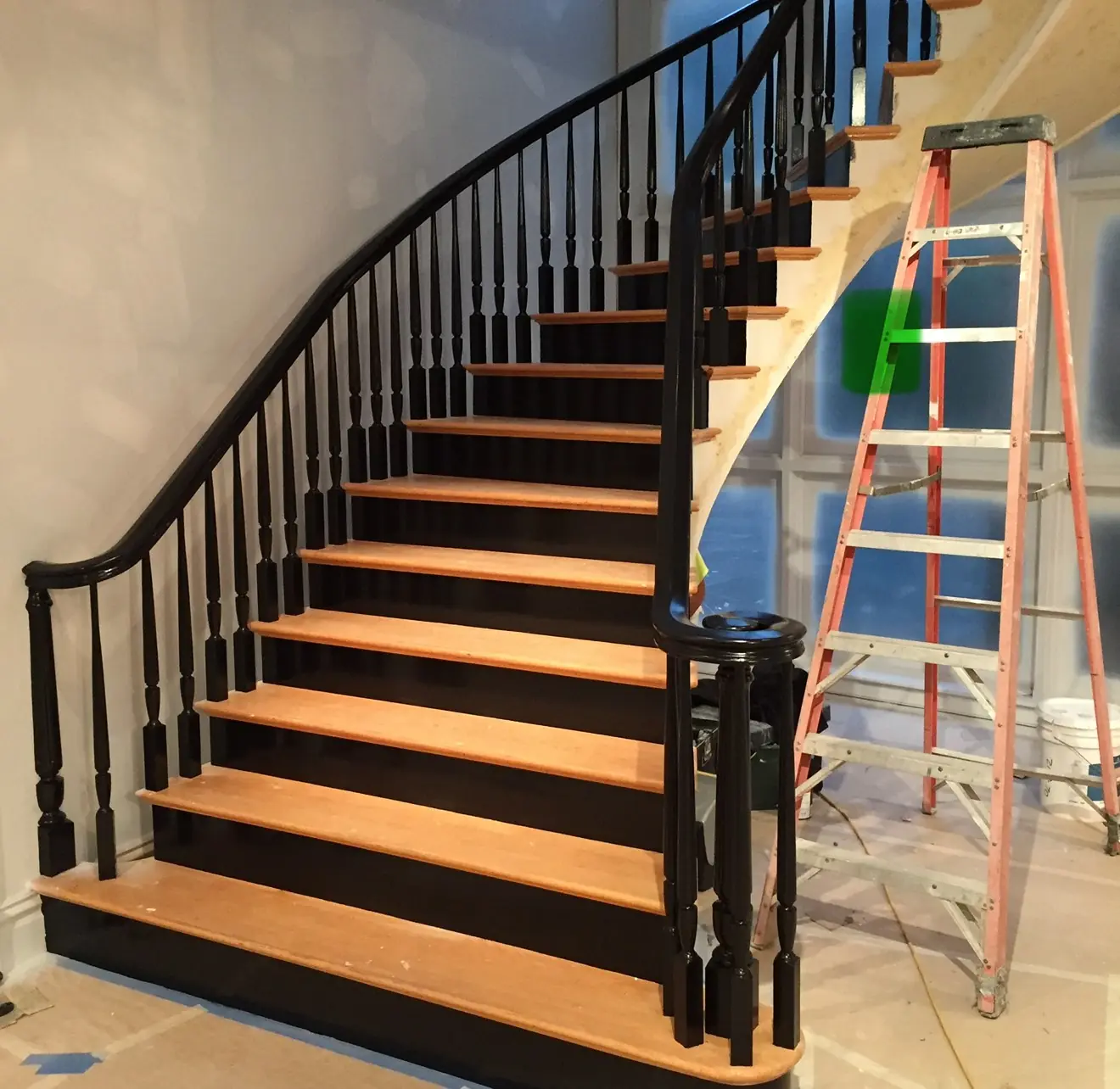
- Stair work: new treads, risers, balusters or a new handrail, repaired or replaced.
Paint-grade or stain-grade
Painted trim can be made from finger-jointed pine, poplar or MDF, which are smooth, stable and economical. Stained trim shows the wood, so it needs clear, matched boards in species like oak, cherry or walnut, which costs more and takes more care to install. MDF does not belong in wet areas like bathrooms and basements prone to moisture. We price the one you want.
The finish is in the details
Tight joints, filled nail holes, caulked seams and straight paint lines are what make trim look built in rather than added on. A single door, a stretch of baseboard or a loose stair rail is worth a call; small jobs are welcome.
Cowboy General Service Inc. remodels, builds and paints for homeowners in Boston and the towns within about 50 miles of Malden, since 2006. Questions about your own house? Call or text (617) 869-2290.