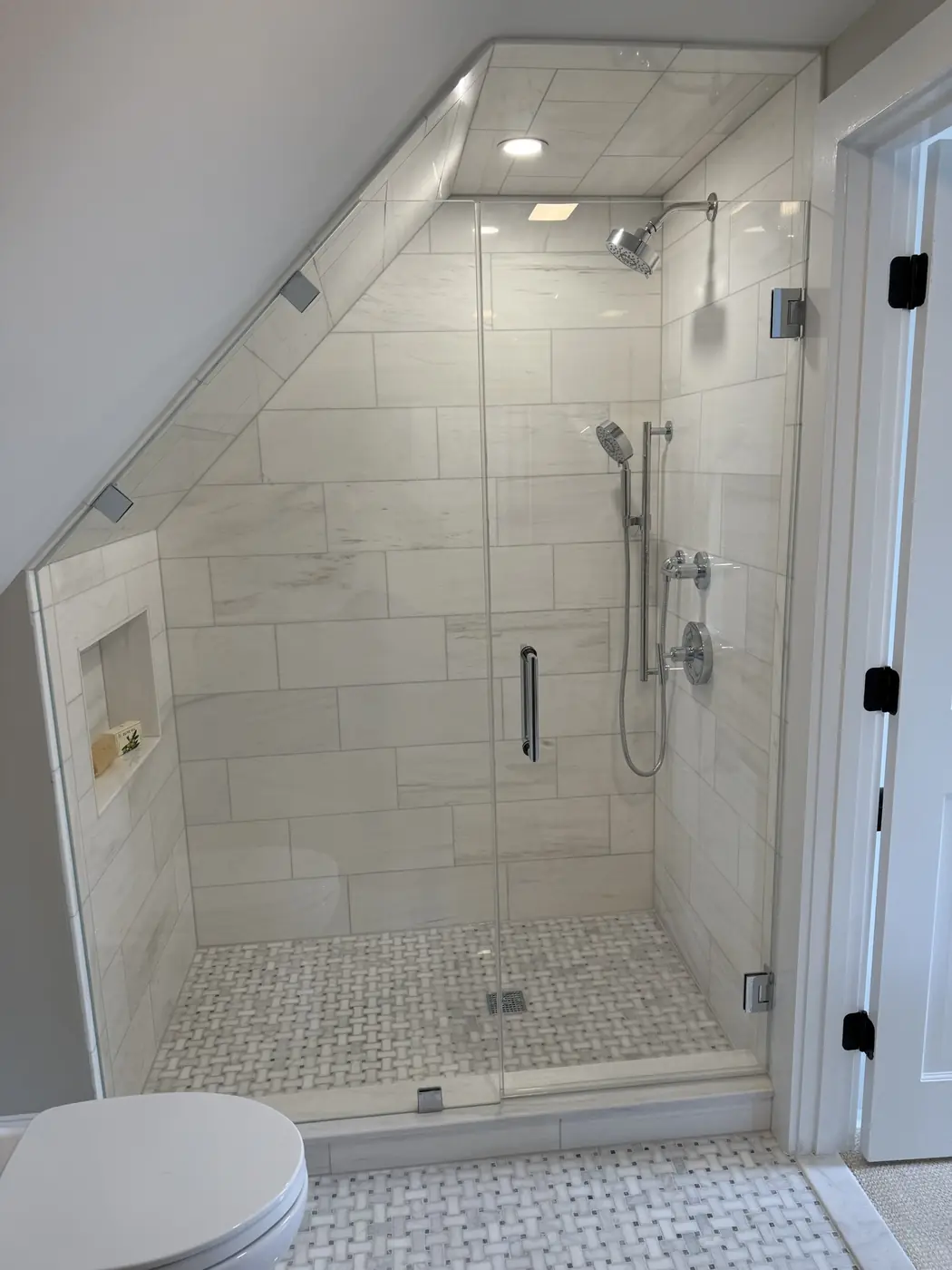
The short version
- Grout and most tile let water through. The waterproofing layer behind them does the real work.
- Regular drywall, even moisture-resistant drywall, does not belong inside a shower.
- The floor must slope to the drain so water never sits.
- Niches, benches and corners are where leaks start. They need the most attention.
Tile is not waterproof
It surprises a lot of people: grout is porous, and water gets through it every time you shower. That is expected. A properly built shower assumes water will get behind the tile and has a waterproof layer there to stop it and send it to the drain. When that layer is missing or has gaps, the water reaches the framing, slowly, for years, until the tile cracks, the grout stains or a ceiling below shows a mark.
That is why we say a bathroom is a small room with no room for mistakes. The parts you never see matter more than the tile you do.
The layers, from the studs out
Solid framing
Straight, sound studs and a stiff subfloor. Movement cracks tile and breaks waterproofing.
The right backer board
A cement-based or foam board made for wet areas. Regular and moisture-resistant drywall are not made for the inside of a shower.
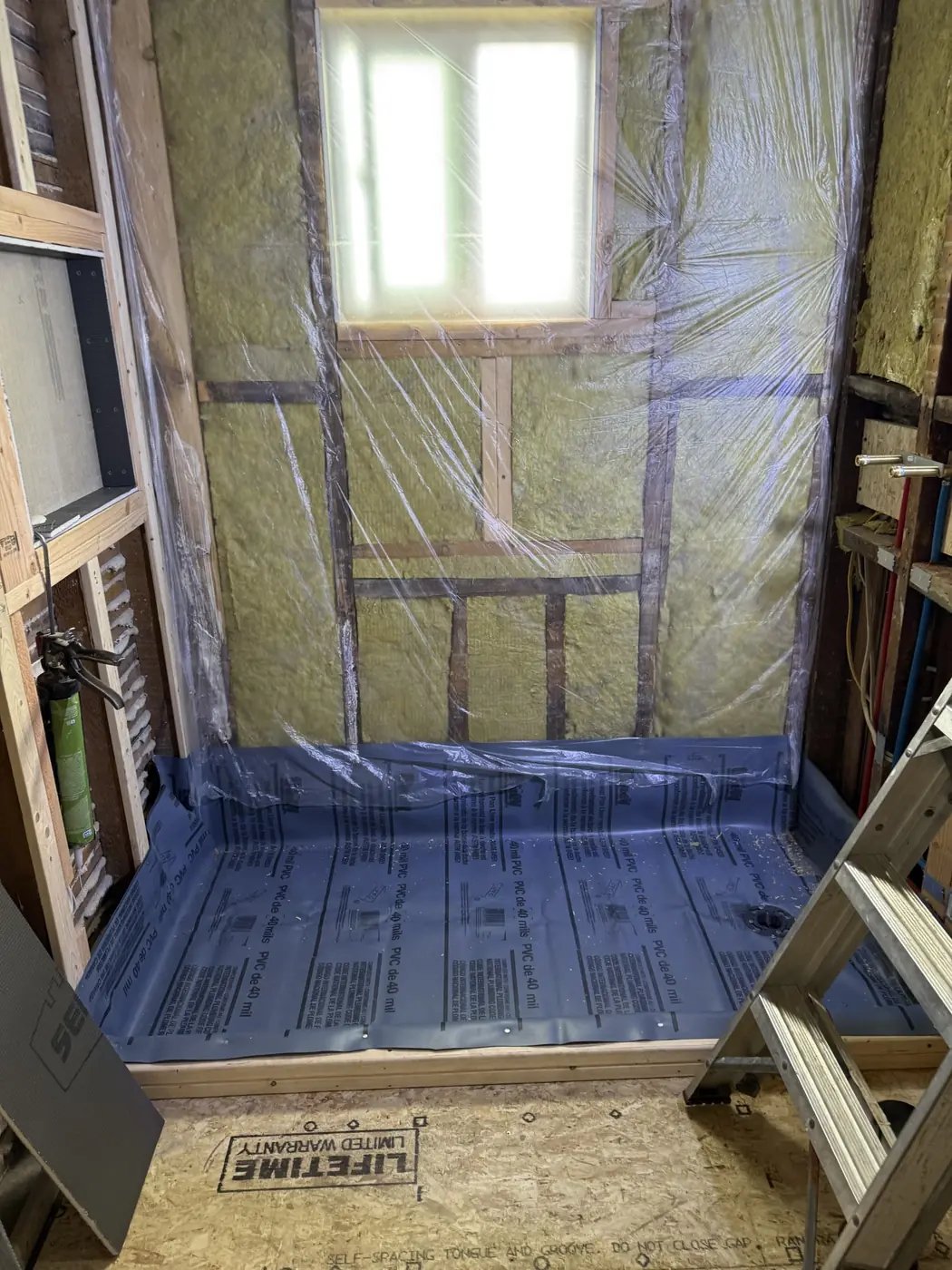
A continuous waterproof membrane
A sheet or liquid-applied membrane over the backer, on the walls and the floor, lapped and sealed at every seam, corner and pipe.
A sloped shower floor
The floor is built to fall toward the drain so water never sits, and the membrane ties into the drain.
Tile and grout
Set flat, with straight lines, on top of everything that actually keeps the water out.
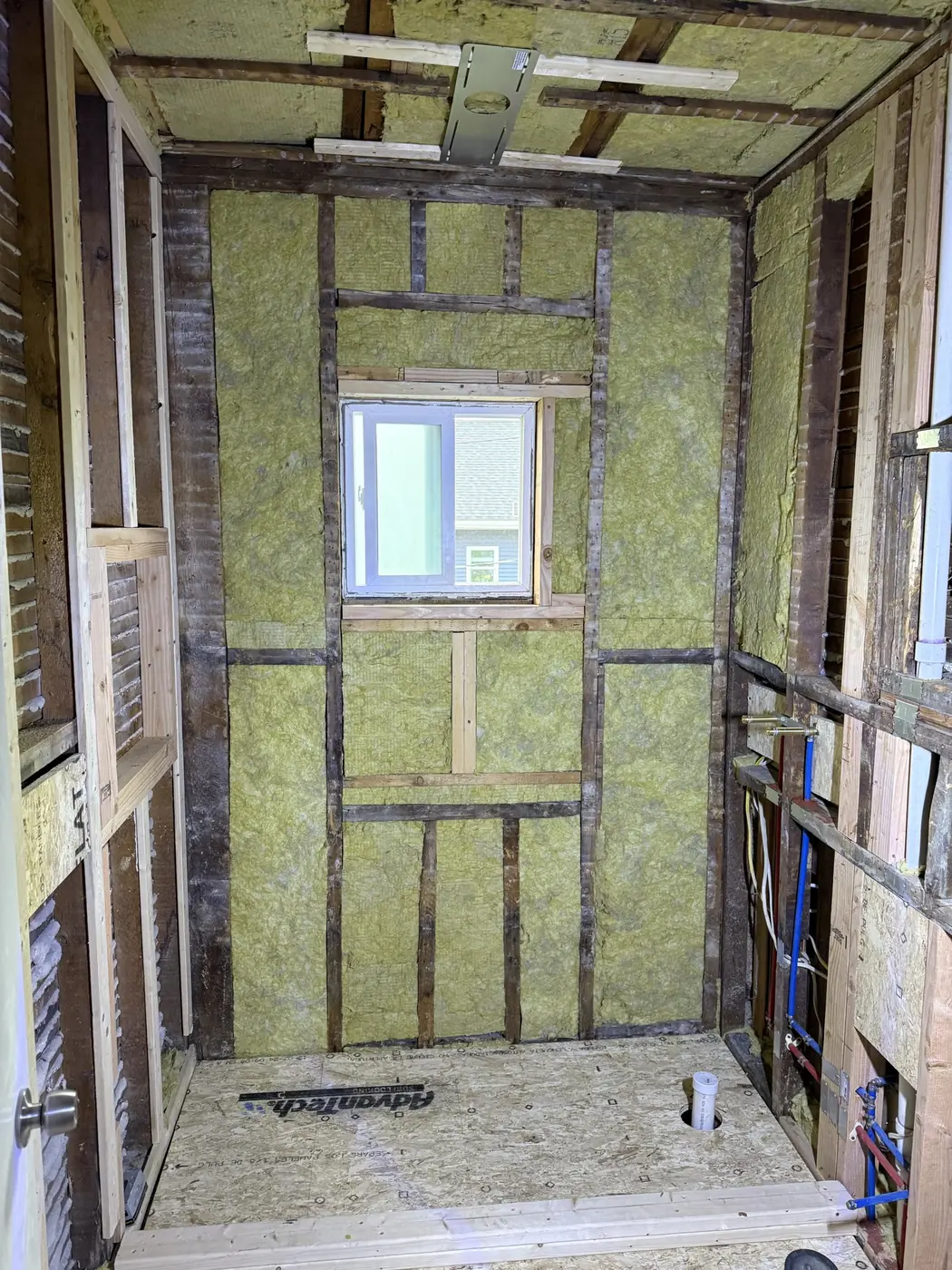
Where leaks usually start
- Niches. The bottom of a niche should slope slightly out so water does not pool, and every inside corner needs to be sealed.
- Benches. Any flat surface needs a slope and full coverage.
- Inside corners and the curb. These move and get the most water.
- Pipe and valve penetrations. Each one needs to be sealed into the membrane.
- Where the shower meets the bathroom floor. The waterproofing should carry past the curb.
Testing before tile
With many membrane systems, the shower floor can be flood-tested: the drain is plugged, the pan is filled with water and left to sit, and the level is checked. If it holds, the tile goes on. It is a simple step that catches problems while they are still cheap to fix.
Questions to ask before your shower is built
- What backer board will be used inside the shower?
- What waterproofing system, and does it cover the walls and the floor?
- How are the niche, bench and corners sealed?
- Will the shower floor be flood-tested before tile?
- Is the exhaust fan vented to the outside?
- If you find damage when the old shower comes out, how will you tell me and price the repair?
Clear answers to these questions are a good sign. Vague ones are worth a follow-up.
Ventilation is part of waterproofing
Moisture that stays in the air ends up on the ceiling, in the paint and around the window. An exhaust fan that is sized for the room and actually vented to the outside, not into the attic, keeps the whole bathroom dry and mildew-free.
Cowboy General Service Inc. remodels, builds and paints for homeowners in Boston and the towns within about 50 miles of Malden, since 2006. Questions about your own house? Call or text (617) 869-2290.